Britain Is Shopping Secondhand First — And the High Street Is Rearranging Around It
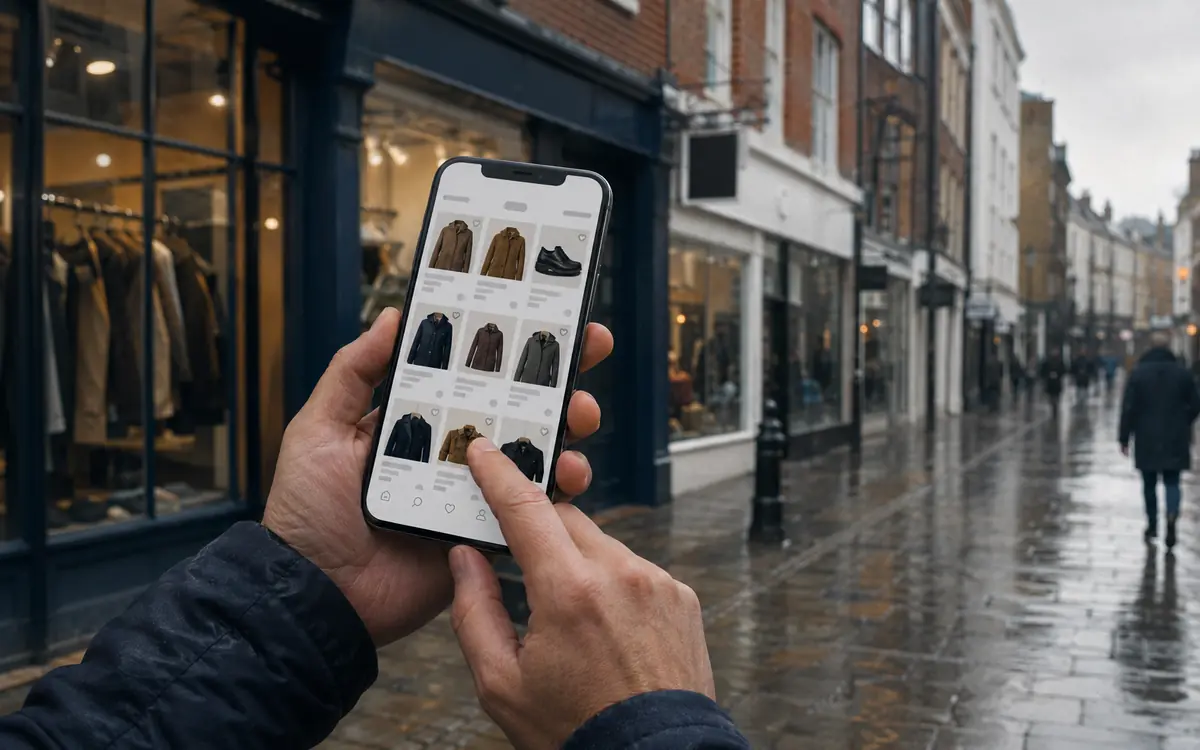
Something has changed in how British people begin a shopping trip. Not what they buy, particularly, but where they start looking — and the consequences are working their way through the entire high street.
The clearest signal is in search. According to retail analysis published this year, the three names recording the strongest growth in share of UK brand search are Primark, Vinted and Next. One is the cheapest large clothing retailer in the country, one is a resale marketplace, and one is a mid-market retailer that has spent a decade positioning itself as reliable rather than exciting. There is no aspirational brand in that list.
The numbers behind it
UK footfall fell 2.1% year on year in the four weeks to 1 August. That’s an improvement on June’s 3.4% decline, but the direction of travel has been consistent for some time.
Meanwhile the closure programmes have accelerated. Phase Eight is shutting underperforming stores as part of a restructuring. LK Bennett entered administration in January. Claire’s closed its UK and Ireland standalone shops in the spring. And the British Heart Foundation has proposed around 150 shop closures over the next two years, on the grounds that rising operating costs have made those sites financially unsustainable.
That last one is worth pausing on. Charity retail ought to be the obvious winner from a secondhand boom, and it isn’t — because the growth has gone almost entirely to peer-to-peer platforms rather than to shops. Buying used has never been more popular in Britain. Buying used from a shop is a different business, and it’s under the same high-street pressure as everyone else.
What “value first” actually means
It would be easy to read this as people simply having less money, and that’s part of it: surveys consistently show a large majority of British shoppers now put price at the top of their considerations when buying clothes.
But the behaviour is more specific than belt-tightening. What’s happening is that the order of operations has changed. A shopper who wants a particular item increasingly checks Vinted before checking the shop that sells it new. If the thing exists secondhand in the right size, they buy it there. If it doesn’t, they go to the cheapest new source.
That sequence is brutal for any brand sitting in the middle — priced above Primark, not distinctive enough to be worth paying full price for, and abundant enough on resale platforms that its own stock competes with itself.
What it means for how we actually dress
The practical effects on wardrobes are more interesting than the retail politics.
Trend-led buying is getting cheaper and faster. If you want to try a shape you’re unsure about — a barrel-leg jean, a strapless dress, a suede blazer — the resale route makes the experiment cost almost nothing. That has quietly made people more adventurous, not less.
Investment buying is getting more deliberate. The flip side is that when people do spend, they research harder. Coats, boots and bags are where the money is going, because those are the categories where quality is legible and resale value holds.
Brand loyalty is weakening. When the search starts on a marketplace rather than a retailer’s site, the label matters less than the item. Shoppers are increasingly assembling wardrobes across a dozen brands they don’t feel particularly attached to.
The mid-market is being squeezed from both ends. Which is precisely why several brands have chosen this moment to return to physical retail through concessions rather than their own stores — lower risk, and a way to be present without betting the business on it.
The AI footnote
One striking counter-current: in a recent multi-market survey, nearly half of UK consumers — 48% — said they won’t use AI to shop for clothing at all. That was the highest rejection rate of any country in the study, well ahead of Germany and the US, and an order of magnitude above China and South Korea.
It’s an unusually blunt result, and it suggests British shoppers are drawing a fairly clear line. They’ll take the price transparency, the resale platforms and the search tools. They’re considerably less interested in handing over the choosing.
What to do with any of this
If you’re buying rather than analysing, three things follow reasonably directly:
- Check resale first for anything trend-led. The shapes moving fastest this autumn are exactly the ones people bought last year and are now clearing out.
- Buy new for the things that take a beating. Boots, coats and denim justify full price because condition is the whole point.
- Ignore the mid-market’s discounting cycle. If a brand is permanently on sale, its full price was never real, and there’s no urgency to buy.
The high street will keep contracting for a while yet. The upside, for shoppers at least, is that it has never been easier or cheaper to dress well in this country — provided you’re willing to start somewhere other than a shop.