A Short History of the Polka Dot in British Fashion
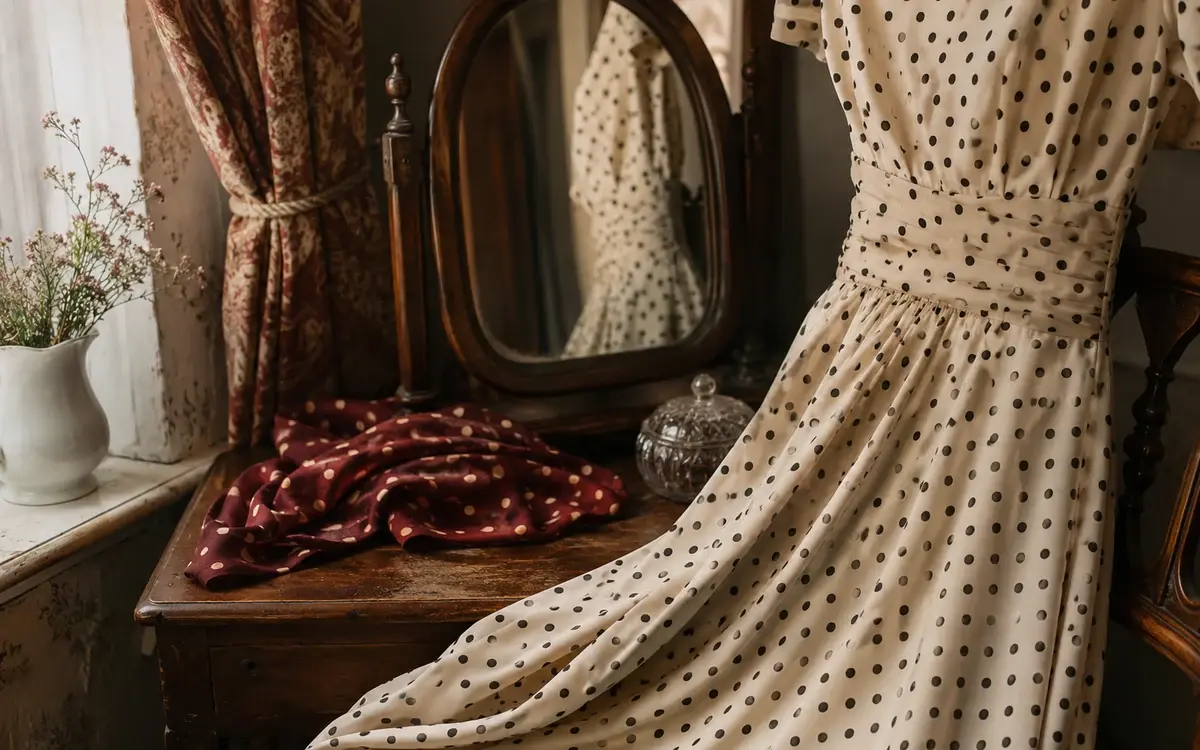
The polka dot is back on the rails for 2026, reworked at Zara and H&M alongside lace trims and basque waists. It’s a good moment to remember that the humble spot has one of the longest and most curious histories of any print in British fashion — a story of technology, royalty and reinvention.
An unlikely beginning
For much of the early nineteenth century, evenly spaced dots were surprisingly hard to produce. Printing a regular, repeating pattern by hand was fiddly and expensive, and irregular spots were associated with disease — the marks of the plague. It was the arrival of mechanised textile printing in the Victorian era that made a clean, uniform dot possible, and the pattern quickly shed its grim connotations to become a symbol of neatness and novelty.
The name and the craze
The “polka” in polka dot has nothing to do with the pattern itself. It borrowed the name from the wildly popular Bohemian dance that swept Britain and Europe in the 1840s — a bit of clever marketing, attaching a fashionable word to a fashionable fabric. The spot became shorthand for cheerful modernity, and it never entirely left.
Twentieth-century staying power
The dot proved remarkably adaptable. It turned up on 1950s tea dresses and full skirts, where it suited the era’s ladylike silhouette perfectly. It became a rockabilly signature. And in Britain it found a royal champion in the Princess of Wales, whose polka-dot blouses and dresses in the 1980s made the print a byword for approachable elegance — smart, feminine and never intimidating.
Why it keeps coming back
Part of the polka dot’s endurance is its flexibility. A tiny, dense spot reads as classic and corporate; a large, widely spaced dot feels playful and bold. It works on silk and on cotton, on a blouse and on a full skirt. That range is why the print never truly dates — it simply shifts scale to suit the mood of the moment.
For 2026, that mood is bigger and bolder: expect larger spots, higher contrast and the dot paired with the season’s volume and lace. More than 150 years after the machines first made it possible, the spot is still finding new ways to feel current.